Thursday, 21 July 2011

bloggers ARE journalist!

"Josh Wolf, the blogger who has spent some six months in prison for refusing to hand over a video he took of a violent July 8, 2005, protest in the Mission District of San Francisco to a federal grand jury, is not a journalist.

He is a blogger with an agenda and a camera, who sold a "selected portion" of the video of the demonstration, which left a San Francisco police officer with a fractured skull, to KRON-TV. The day after the melee, Wolf called himself on his videoblog an "artist, an activist, an anarchist and an archivist." He does not work for a news organization. He does not answer to editors who fact-check. I do not understand why newspapers -- including The San Francisco Chronicle -- refer to him as the "longest-imprisoned journalist" in America.

San Francisco Assemblyman Mark Leno, who has spoken at Wolf fundraisers, told me, "I think he, and those who are doing similar kind of work, is in the process of redefining what a journalist is relative to 21st century technology." In this brave new world, no definition is sacred any more. But a camera and a Website do not a journalist make, any more than shooting a criminal makes a vigilante a cop."


Are bloggers journalists? Look to history. Boston University journalism professor Chris Daly writes that “bloggers stand squarely in a long-standing journalistic tradition. … Their roots go back to the authors of the often-anonymous writings that helped to found America itself by encouraging the rebellion against Britain.” So we today are at the beginning of a revolution in journalism. Isn’t that exciting? (Be sure to check out my post on whether blogging is journalism and the thoughtful comments, including one from Daly about this essay.)
Why you should hire a journalist: Jill Geisler, of the Poynter Institute, has what I think is a great blog post. It explains to hypothetical employers why journalists make good workers. She lists 10 characteristics that make journalists good hires for any job, including writing skills, ability to get answers quickly and speed at meeting deadlines.
My favorite takeaway: Journalists have “been trained that ‘If your mother says she loves you, check it out.’ Journalists know that asking why and why not, looking at multiple perspectives, digging beneath the surface, challenging conventional wisdom, discerning patterns, finding context and thinking about “what’s next” improves any story. Just as it improves job performance in most any field.” That describes most of the journalists I know — both laid off and still on the job.
Print your own newspaper: Martin Langeveld has a provocative post at the Nieman Journalism Lab. He explains that OcĂ©, a Dutch firm, has unveiled a new digital web press that could print full-color individually customizable newspapers fast. The idea is readers would sign up for the news they want, and the newspaper would print and distribute the individual papers to the readers.
Essentially, the Web allows people to do that now, for free. They read the stories or blogs they like. But this idea would give readers insurance of sorts that they got all the stories on a particular topic of interest, and they wouldn’t have to surf for them.
Would it work? Langeveld points out it could pose problems with larger newspapers, although one of the commenters makes a cogent case for using these individual newspapers to support hyperlocal efforts


My take: Explore it; can’t hurt

Wednesday, 20 July 2011

Topic Discussion 3

Are bloggers journalists? What is your take on this? 

Please read these two interesting articles.
http://chris.pirillo.com/are-bloggers-journalists-are-blogs-new-journalism/
http://www.businessweek.com/technology/content/mar2005/tc2005037_7877_tc024.htm

Monday, 18 July 2011


“A stereotype is a popular belief about specific social groups or types of individuals. The concepts of "stereotype" and "prejudice" are often confused with many other different meanings. Stereotypes are standardized and simplified conceptions of groups based on some prior assumptions.” -Wikipedia-

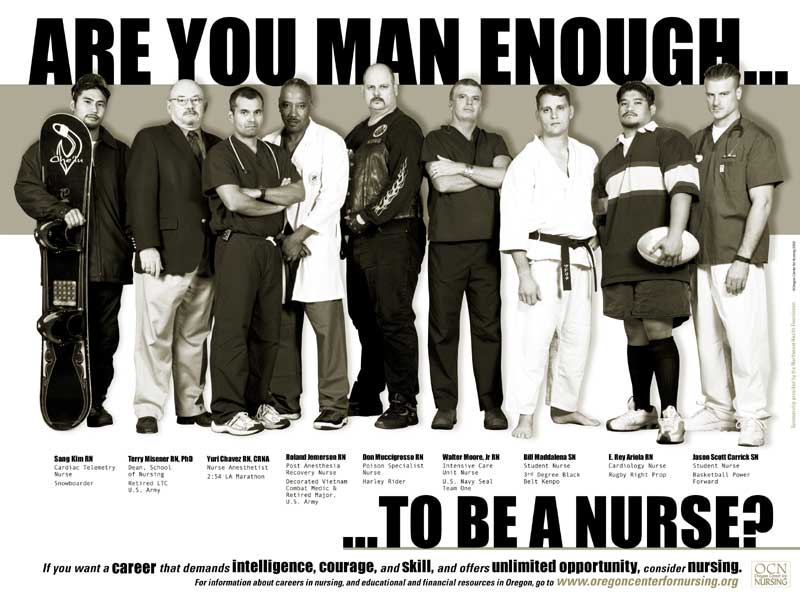
In my opinion, stereotype have been a people mind set of making assumption toward others. The sentences like ‘army is for men” while “chef is for women” is an example of occupation based on gender stereotypes. Those are good stereotypes although when the gender role have been changed, it’s still consider as okay in the end.

People always makes an assumption in their everyday life. Example like when I see an elegant beautiful woman, I will think that “oh maybe she doesn’t want to talk with me”, but surprisingly the elegant beautiful woman is very friendly. But not every people is same, I saw another elegant beautiful woman and my thought is that “oh maybe she is friendly”, but it turns out she ignores me which makes me want to rolls my eyes and say “whatever”.

So the stereotype conclusion is; don’t judge the book by its cover.


Sunday, 17 July 2011

Stereo-type-ism in Malaysia

Multi-races people in Malaysia

Seems like the Hollywood had conclude that 'all Muslim should be known as terrorists' after the 11/9 incident including my dad. My mom and dad once arrested during their trip to Germany, suspected as terrorists just because my dad's first name is Mohamad. Ridiculous isn't it? But then, it is a fact. But now I woud like to discuss more about stereotypes in Malaysia. Stereotypes are just like a kind of microchip that exists in human's head. It will conquer the human's perception according to their norm and believe. In Malaysia for example, we assume that all Malays are lazy and Chinese are business-minded but not all Malays are lazy and not only Chinese can handle business well. It is just a kind of stereotype. Furthermore, our community nowadays, create a lot of stereotype names such as, Mat Rempit (known for the streets kids that ride motorcycle and do the excessive stunts), Budak Pavi (known for the youngsters that  hang out around Pavillion Kuala Lumpur with a DSLR hanging on their neck), and etc. What a creative community we have. This stereo-type-ism thing makes our country to be more unique and it implement some kind of essence to our culture. When it comes to food, Nasi Lemak is for Malay, Bak Kut Teh is for Chinese and Roti Canai is for Indian. Eventhough it looks slightly like close-minded perception, but it brings the unique identity to our country, Malaysia. So this is my perception, my stereo-type-ism and what's yours?

Nasi Lemak for Malays

Bak Kut Teh for Chinese


Roti Canai for Indian


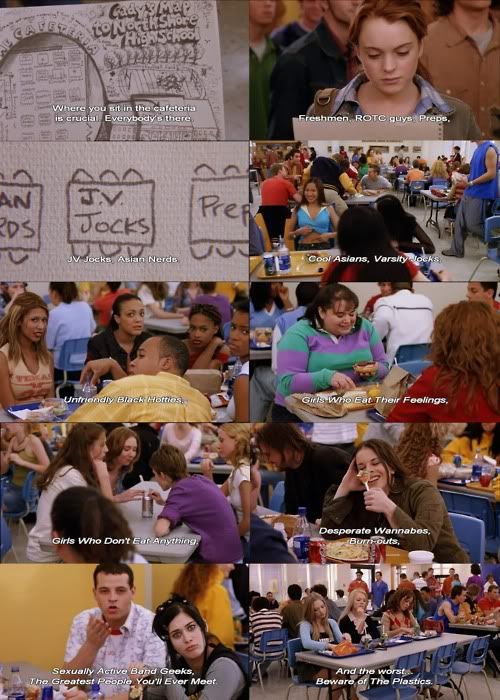
Highschool Cliques


Stereotype is an easy generalization made by others to the people around them. C’mon, let’s be honest here, everyone has a stereotyped opinion on others. Some famous stereotypes are that; Asians are smart and nerdy, Blacks have guns and wear blings around their neck, Italians are mafias with thick accent, jocks are jerks, blondies are bimbos and Brits love teas.

For me, personally, stereotypes are easier seen in high school themed films as everyone is categorized and judged accordingly to their stereotypes. The stereotypes in high school themed films are the most common and it unfortunately exist in every high school themed films like Mean Girls, High School Musical, Glee, Lizzy McGuire and lots of other films that you might be familiar of.

The cheerleaders, the jocks, the gays, the disabled, the Asians and the outcasts.

In this video above, the stereotypes sit together on the same table in the cafeteria and only hang out with each other. Let’s face it, there might be some bitter truth in the stereotypes BUT don’t you ever heard of “don’t judge a book by its cover”?

The labels.

I think this is the case with stereotypes that irked me the most. You only see the cover hence the stereotyping but there could be much more underneath a cover. If Asians are nerds, it doesn’t mean that they’re smart. And for God’s sake not all Blacks dressed in blings and talk swagger. There’s more to a person than what they are labeled.

I think, everyone has that something, that X-factor, that sets them apart from each other. But we are blinded by the labels that we put on them. Heck, every individuals have different and distinct thumbprints. That much could explain that everyone is different and special.

We just take the easier route of clumping the seemingly similar people together but in fact they are very different to one another. Just seemingly similar. Finding that X-factor in someone is like playing spot the differences between two pictures. It looked seemingly similar, but there are differences.

Can you spot the differences? :)

Conclusion is, some stereotypes might be true but they are more to someone than what they are labeled to be.

Stereotyping the word Stereotype???

Stereotyping in my opinion can be referred to as classification of people groups using generalized simplifications. Often stereotypes are thought to be bad and, don't get me wrong i agree but my question is it the case or are we in this case just 'stereotyping the word Stereotype'.

 'All Muslims are terrorists' or 'All Asians are bad drivers' are common negative stereotypes in the world since they hurt the group of the classify but how come when someone else says "All Black guys are good at Sports" it doesn't seem to be a problem for the blacks at least, that example may be harmful to other groups of people but it is definitely look at as a source of pride to the blacks.


 My point is that are stereotypes only termed as stereotypes if they are negative? Or are all stereotype to at one point a good thing to a group of people...."America is the land of opportunity", this stereotype dumbs down other areas in the world but is seen as a good thing to the American people.


So are all stereotypes negative? Or are we just Stereotyping the word?

Media Stereotypes


This post is I am repeating it back from my previous blog which i posted it for my creative studies and I am repeating back. Stereotype is a term that we put in a subject as a representation, on the contrary prejudice. Usually, stereotype always represent the subject in negative side but Not all the stereotypes are negativeMan usually stereotyped as strong because they always go out of their home while woman usually stereotyped as weak because they always be in home to take care of family and to cook. But both of them can be strong or weak. It depends on the ability and characteristics of a person. This can be know as a common stereotype.


Other example of stereotype which represent negative side is The Game labeled as ‘violence’. People judge a subject, even though the prejudice is not 100% correct and exact with the subject. Among the parents, they judge games as violence because it harms their children's education and changes their behavior based on the game their children played. For an example among the community, when you hear a name or word, you will relate that to something else. It is just a representation that people commonly use it. This is called a stereotype.


Malays - Sepak Takraw

Chinese - Badminton

Indians - Cricket

Where usually stereotype come from commonly? Of course, it's from media. Media nowadays represent stereotype to send their massages in a simpler way form to the community. They think that stereotype is one of the easiest way to say their messages through media. Based on my experiences and research, one of the example i can say about stereotype is "African-American Are Good In Basketball". This one is in America but it also applies here in my country which is Malaysia like for the same example which is "Malays Are Good In Sepak Takraw", "Chinese Are Good In Badminton" and same goes to "Indians Are Good In Cricket". Overall, it represent a race concur  a game or sport in worldwide. Another huge example is "Blacks Are Good In Running". Biologically, scientist have proved that people with darker skin can run faster than others. All this stereotype are known as positive stereotype.


Lets focus on African-Americans. This is true that largest percentage of professional basketball players in the NBA sports. The majority of the top college basketball programs also have mostly all the healthy African-Americans. Same goes to Malays, Chinese & Indians in their skills in sports they control. But, this doesn't mean that every man and woman able to play those game based on color or racial. It is just that, since small, each race have exposed themselves to the game that they always favor. They have adapt the sport the sport of their people play very well when they were in childhood time until they loved the game so much. When they grew up, all they do were just brushing their skills in that particular sports. That's why we can see that most of the games were concur by particular race of people.So, overall I can say is, all stereotypes doesn't represent negative side. There also also positive side which gives good impact towards the society. It's just the matter of how the community express those stereotypes through media and how they adopt it in their daily life.