Sunday, 17 July 2011
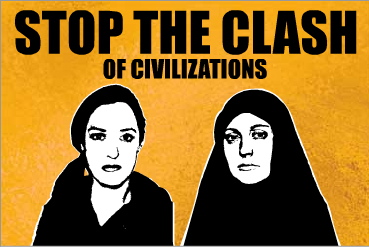
Women?

Friday, 15 July 2011
Stereotypes are simple,one-dimensional portrayals of people..
MEDIA STEREOTYPE
Media Stereotyping Media stereotypes are inevitable, especially in the advertising, entertainment and news industries, which need as wide an audience as possible to quickly understand information. Stereotypes act like codes that give audiences a quick, common understanding of a person or group of people—usually relating to their class, ethnicity or race, gender, sexual orientation, social role or occupation. But stereotypes can be problematic. They can:
This section comments on common media stereotypes and examines some of the root causes of stereotypical portrayals, including lack of diversity behind the scenes in newsrooms and film studios. The section explores the impact of stereotyping on self-image and the development of attitudes among the young, and it showcases efforts to counter stereotyping with alternative programming. It also outlines diversity guidelines for the broadcasting industry, as well as government policies to promote fair and equitable portrayals in Canadian media. For further information and research, each of the sub-topic sections below also offers a continually updated selection of pertinent articles, reports, surveys, statistics, and Web sites. AND the media portrays such as.......... This section examines the representation of minority groups in the media industry—both onscreen, in sitcoms and news reporting, and off-screen, in terms of hiring practices. It also looks at Canadian government policies and broadcasting industry codes that encourage diversity. This section examines media attitudes to First Nations, Inuit and Native American peoples - from early films and television to today's coverage and portrayals. The section looks at the effect on young people's attitudes of seeing Aboriginal people shown primarily in cartoons or as sports mascots; and it also discusses the development of Aboriginal broadcasting in Canada. This section explores female stereotypes in entertainment and news media, including onscreen portrayals of women, their effect on cultural ideas of beauty, and how these stereotypes influence the social development of young women. The section also examines the economic interests that drive media attitudes towards women. This section examines common stereotypes of masculinity on TV, in men's magazines, and in advertising and sports media. It discusses society's definitions of male roles and attributes, and the effect that media portrayals have on men's (and young people's) notions of what masculinity means. This section offers a brief overview of how gays and lesbians are portrayed in the media: the evolution of gay portrayals in film, issues related to gays and lesbians in television, and how advertising and news coverage treat gays and lesbians. This section explores the social norms and expectations associated with being white—including the media's tendency to accord respect and authority to white people, especially from the middle and upper classes. Onscreen and behind the scenes, white privilege (along with male privilege, and "straight" privilege) fosters a climate of systemic discrimination that tends to exclude many diverse views from the media. This section examines common stereotypes of persons with disabilities in mass media and the news. It discusses concerns about media representation of disability, including lack of participation, as well as looks at solutions to better represent persons with disabilities. |
Topic Discussion 2.
Sunday, 10 July 2011
Gaming in Social Media


Did social media change my life?

Saturday, 9 July 2011
The lifestyle; is it for better or worse?
Did you know what social media is?Hmm probably the word would sound foreign to your ears. But what about Facebook, Twitter, Skype, flickr and foursquare huh? Not so foreign anymore right? So basically social media IS Facebook, Twitter, flickr and foursquare; those sites that you couldn’t live a day without. 
Now, let me ask you some questions. Do you still remember how back in those days we communicate with other people using snail-mail? Wow, those days seems so faraway now with the existence of Internet. What century was that anyway, the 18th? Heck, I didn’t even think I had ever sent a snail-mail before.
Social media did wonders in improving our life, but don’t you think we spend too much time and rely too much on social media? When the last time you refer to a book if you didn’t know something? I couldn’t remember, because I only used Google if I feel clueless.
I could spend hours doing nothing but staring people’s pictures onFacebook. With that said, my times that supposed to be precious doing assignments and hanging out with family and friends are just wasted doing absolutely nothing beneficiary or productive at all.
See the differences? Uh-huh.
Honestly, I would feel very…empty if I have not logged in into any of those social media in a day. I would feel left behind, I would feel lost if I did not do so. It’s pretty much an addiction. I tried once deactivating my Facebook account for a week but I feel so lost because even puny things like assignments are discussed through Facebook, how would I continue on living if I deactivate my Facebook forever?
Social media is taking away the pleasure of communicating and meeting in person as everything could be done virtually. Dating, flirting, working, eating, playing – you name it. Everything could be done virtually. Remember Wall –E? The side effects of humans relying way too much on technology, it ain’t a pretty sight – if you know what I mean.
You want to be like this? Really?
Information spreads faster as well on social media. There are good sides of this (in times of natural disasters like earthquake) since the Internet is basically unfiltered unlike broadcast and printed media where details are filtered and manipulated for some purposes. BUT with this rumours could also spread faster, faster than you could say ‘fast’. C’mon, tell me, how many times have you read faked death news of a celebrity on social media?
I have lost count on how many times Justin Bieber died.
With social media too, people generally have become meaner due to the anonymousity of the Internet. People could say that they have the right to comment on anything as they like but really, in real life, would you dare too? It’s a good thing that people have become more outspoken (albeit, online) but I feel the need to stress the line of being mean/troll or just speaking out their thoughts.
Say for example, let’s take Rebecca Black. She debuted on Youtube with Friday. Yeah, you know, that horrendous catchy song “Friday, Friday getting down on Friday”. So, she’s only 13 or 14 but the comments on the video saying that she should just die and everything is just…”wait, a second, you didn’t even know this girl and you telling her to go die just because of a song, don’t you think it’s…mean?”
Imagine if Ms. Black in front of you, do you have the guts to tell her that? I don’t think so.
It didn’t help that Ms. Black’s horrendously catchy song had become an internet meme, that in my opinion is worse than school bullying. You can say meme is a part of internet pop culture and stuff but really, if you were in poor little Rebecca’s shoes, would you say the same as well?
Well, so that’s my take on how social media affects the society.To conclude this post, social media is just like drugs. It could be good or bad based on how you handled it. Too bad there's no rehab for social media addicts :(